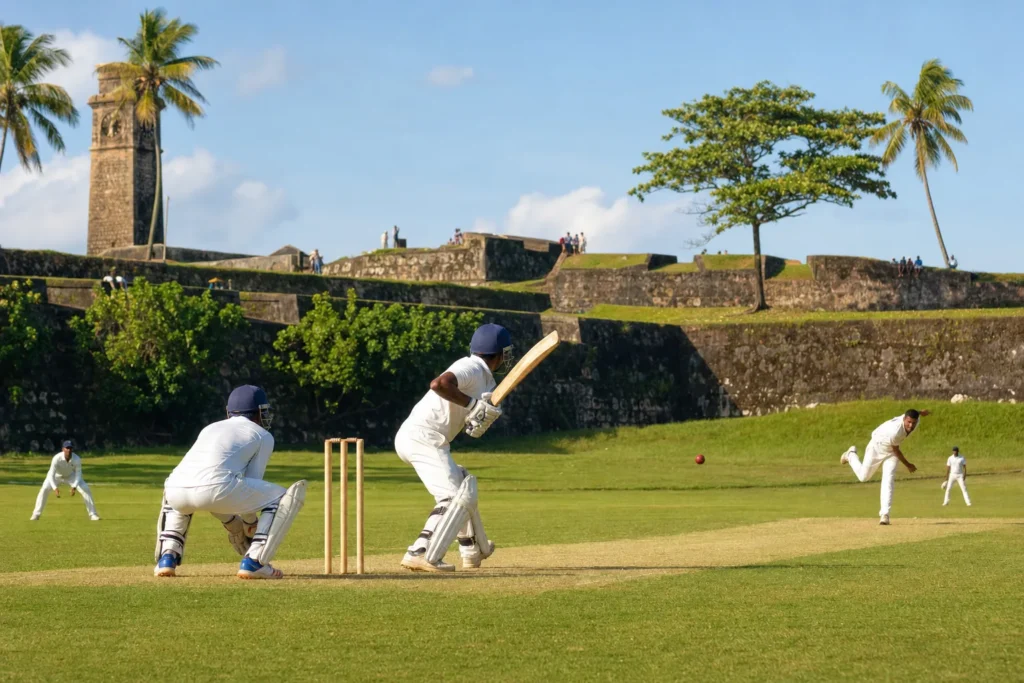
The India tour of Sri Lanka 2026 is short, sharp and consequential: two Tests in August, both counting toward the World Test Championship 2025-27 cycle. The first Test runs 15 to 19 August at Galle, the second 23 to 27 August at the Sinhalese Sports Club in Colombo. Eight days of scheduled cricket, with barely a breath between matches, and WTC points attached to every session.
For bettors, two-Test series in Asian conditions are a particular animal. Small sample, big swings, and venues whose characteristics are strong enough to shape the odds before a ball is bowled. Here is how to think about this one.
Galle First: The Venue Is Half the Preview
Galle is one of Test cricket's most distinctive grounds, and its reputation rests on spin. Matches there tend to be decided by slow bowling, results come more often than draws, and the toss carries weight because batting tends to get harder as the surface wears. All of that flows straight into the markets: expect short prices on spinners in top-bowler markets, expect the draw to be priced longer than at most venues, and treat fourth-innings chase situations with suspicion when betting in play.
The second Test at the SSC in Colombo is a different test paper. Colombo surfaces generally offer batters more, which shifts the calculus on totals and lengthens the odds of a three-day finish relative to Galle. Do not copy your Galle reads across; reprice from scratch.
The WTC 2025-27 Stakes
Both matches count toward the World Test Championship 2025-27, and that changes behaviour. Points percentage decides who reaches the final, so a drawn series is worth much less to both sides than a won one. Practically:
- Captains push for results: earlier declarations, funkier fields, more attacking options when a game drifts.
- The draw price deserves extra scrutiny. WTC incentives plus Galle's result-friendly nature can make backing the draw a poor habit in this series, at least in the first Test.
- Session-by-session in-play betting benefits from the urgency; teams take risks that create odds movement, and movement is where in-play value lives.
India in Sri Lanka: Familiarity Without Comfort
India travel to Sri Lanka with conditions closer to home than any other away assignment, and the market prices them accordingly; expect India to start favourites in both Tests. But familiarity cuts both ways. Sri Lanka's spinners operate at home with the same advantages India's do, and Asian conditions compress the gap between the sides' bowling attacks. When weighing the match-winner price, ask whether it reflects a genuine gulf or just reputation. The number to build from is implied probability: a price of 1.60 on India implies 62.5%, and you should only take it if your honest estimate is higher.
Markets Worth Focusing On
- Match winner, but shopped. Two-outcome-plus-draw markets show meaningful price differences between operators. Check a couple of the best cricket betting sites in India before locking anything in; our bookmaker reviews note which books consistently post the lower margins.
- Top match bowler. At Galle especially, structuring this around spin is the obvious play, which also means spinner prices get short; value often hides in the second spinner rather than the headline name.
- Innings totals. Venue-driven markets reward venue knowledge. Galle and the SSC should not be priced the same, and when a book is slow to differentiate, that is your opening.
- Series correct score. With only two Tests, 1-1, 2-0 and 1-0 outcomes carry real probability each; this market often prices the draw-inclusive scorelines lazily.
Practical Notes for Indian Punters
Sri Lanka's time zone matches India's, so unlike the New Zealand tour later in the year there are no early alarms; play runs through the normal IST day, which makes session betting genuinely convenient. Five days of Test cricket also produce more betting opportunities than any T20, and that is a risk as much as a feature. Decide your series budget before 15 August and split it across both matches, rather than reloading after a bad first Test. The staking principles in our cricket betting guide apply doubly to long-format betting.
Two Tests, two very different venues, and championship points on everything. It is a compact series with plenty in it. Bet it like an adult: 18+ only, fixed stakes, and never money you cannot afford to lose.
FAQ: India Tour of Sri Lanka 2026
When and where are the Tests played?
Two Tests in August 2026: the first at Galle from 15 to 19 August, the second at the Sinhalese Sports Club in Colombo from 23 to 27 August. Both count toward the World Test Championship 2025-27 cycle.
Why does Galle matter so much for the betting?
Galle is a spin-dominated ground where results come more often than draws and batting tends to get harder as the surface wears. Expect short prices on spinners in top-bowler markets and treat fourth-innings chases with suspicion in play. Colombo offers batters more, so reprice the second Test from scratch.
How do the WTC stakes change the series?
Points percentage decides who reaches the final, so a draw is worth far less than a win to both sides. Captains declare earlier and attack longer, which makes generous-looking draw prices less generous than they appear, especially at Galle.
Are the start times convenient for Indian bettors?
Yes, Sri Lanka shares India's time zone, so play runs through the normal IST day. That makes session-by-session in-play betting genuinely convenient, unlike the early alarms the New Zealand tour demands later in the year.
Will India be favourites?
Almost certainly, in both Tests. But Asian conditions compress the gap between the attacks, and Sri Lanka's spinners enjoy the same home advantages. Convert the price to implied probability first: 1.60 on India implies 62.5%, and the bet only makes sense if your honest estimate is higher.